

The connected platform
Everything Nexa One does
Every module works on one set of customers, products, stock and accounts, plus the platform they share. Each list below is what the product does today.
Connected modules
Sell & grow
Keep customers and sales connected.
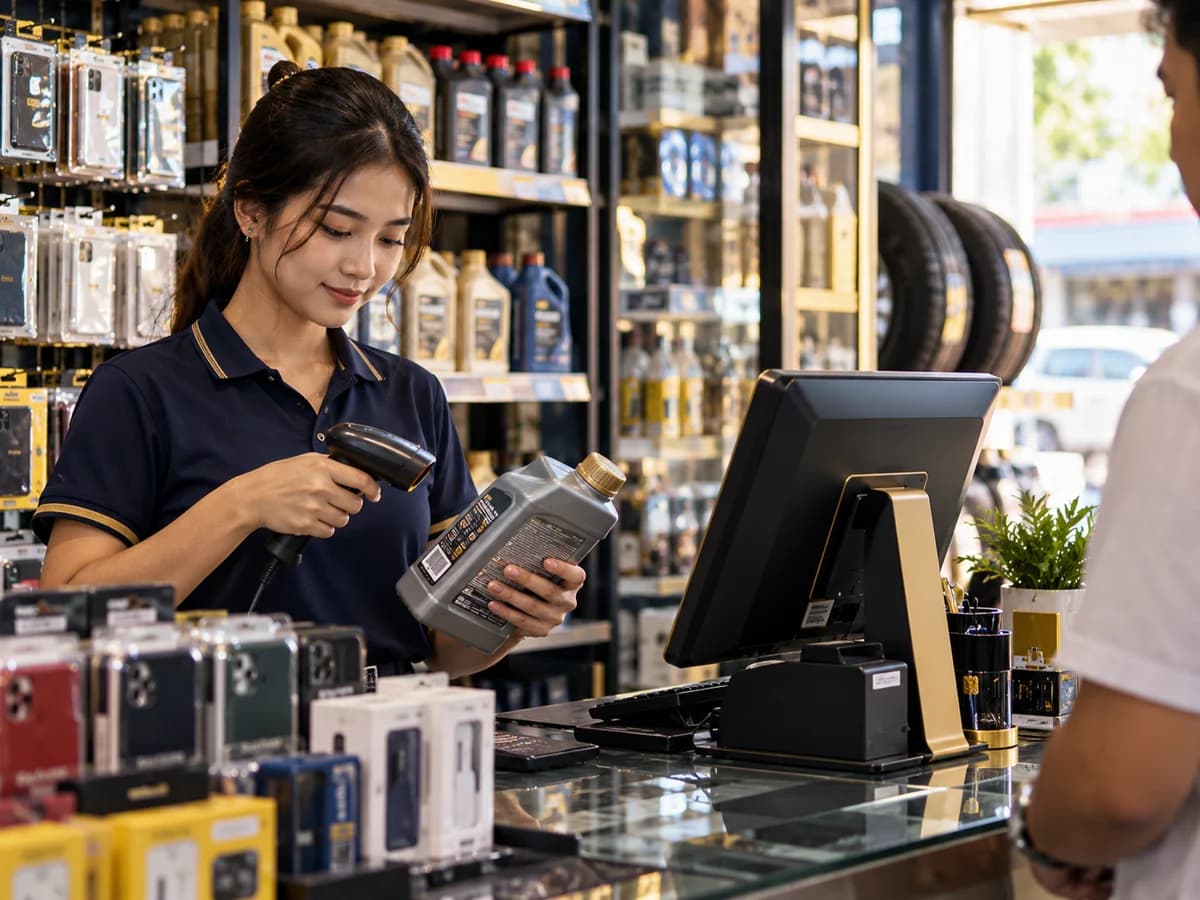
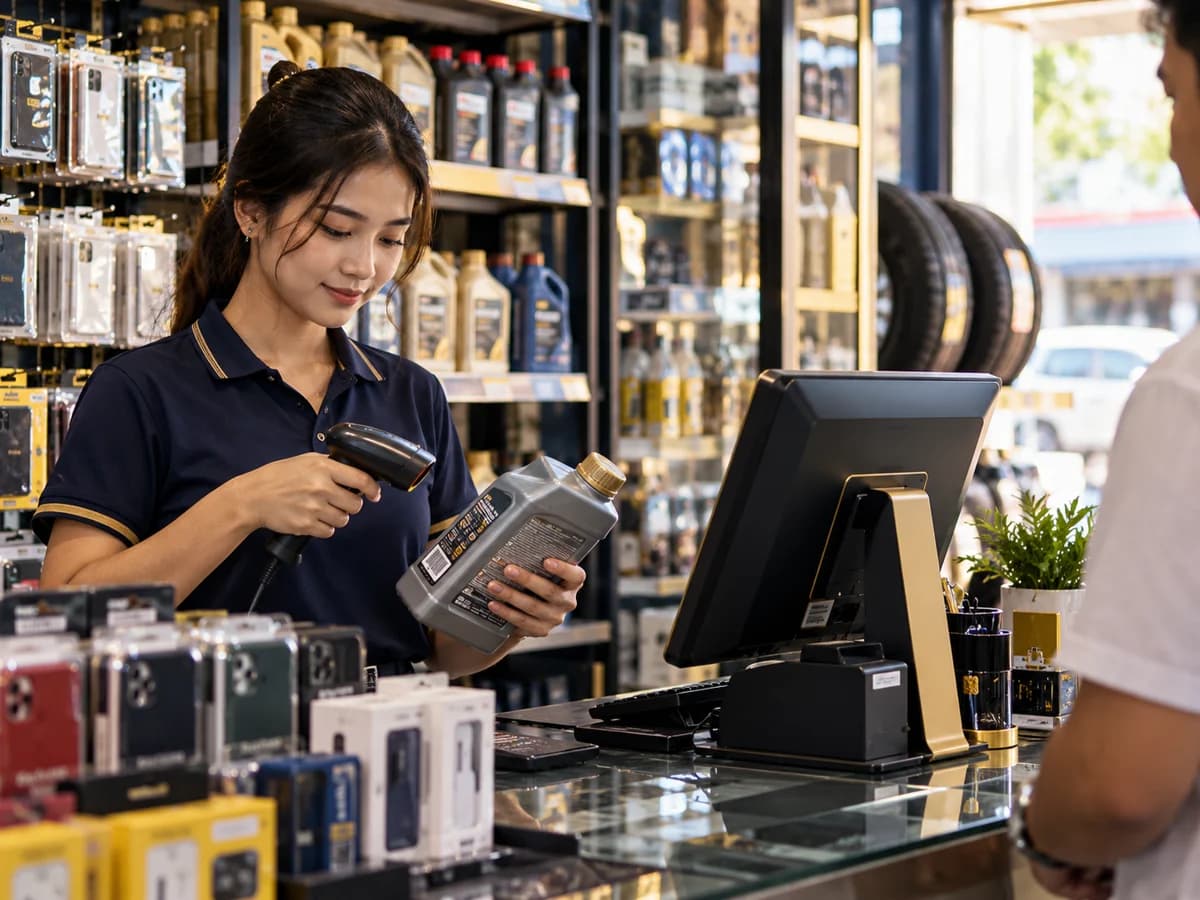 Sales & POSSell by quantity or IMEI at the counter, on credit or by reservation, in any branch.
- Fast checkout with barcode and IMEI selection
- Wholesale with credit limits
- Promotions and member points
 Restaurant & HotelTable service with kitchen tickets for a restaurant, and rooms, bookings and check-out for a hotel or guesthouse — each bill recorded in your accounts.
- Tables, menu and kitchen tickets
- Rooms and bookings with no double booking
- Check-in, extras and check-out bills
 CRM & MarketingWin customers and keep them coming back.
- Leads, deals and quotations
- Email and SMS campaigns
- Customer surveys and support cases
 Service & RepairManage repair jobs, technicians and warranty claims.
- Job tracking from intake to invoice
- Technician scheduling
- Warranty and service contracts
 Delivery & LogisticsDeliver orders, collect cash and let customers follow along.
- Delivery orders and routes
- Live tracking of drivers on a map
- Customer tracking link
Connected modules
Stock & supply
Move goods from suppliers to finished products.
 InventoryKnow what you have, where it is and what it is worth.
- Many warehouses and bin locations
- Expiry dates, lots and recalls
- Stock counts and reorder points
 PurchasingOrder from suppliers and receive goods at their true cost.
- Purchase orders and goods receipt
- Landed cost for freight and duty
- Supplier returns
 ManufacturingTurn materials into finished goods and know what each run cost.
- Bills of materials
- Work orders and routing
- Quality checks and cost variance
 IntegrationsBring your existing data into Nexa One from a spreadsheet, when switched on for your organization.
- Bring in your existing data from a spreadsheet
Connected modules
Money & control
Know where money goes and who approves it.
 AccountingDouble-entry books that post themselves from every sale and purchase.
- Automatic journal posting
- Profit and loss, balance sheet, cash flow
- Multi-currency
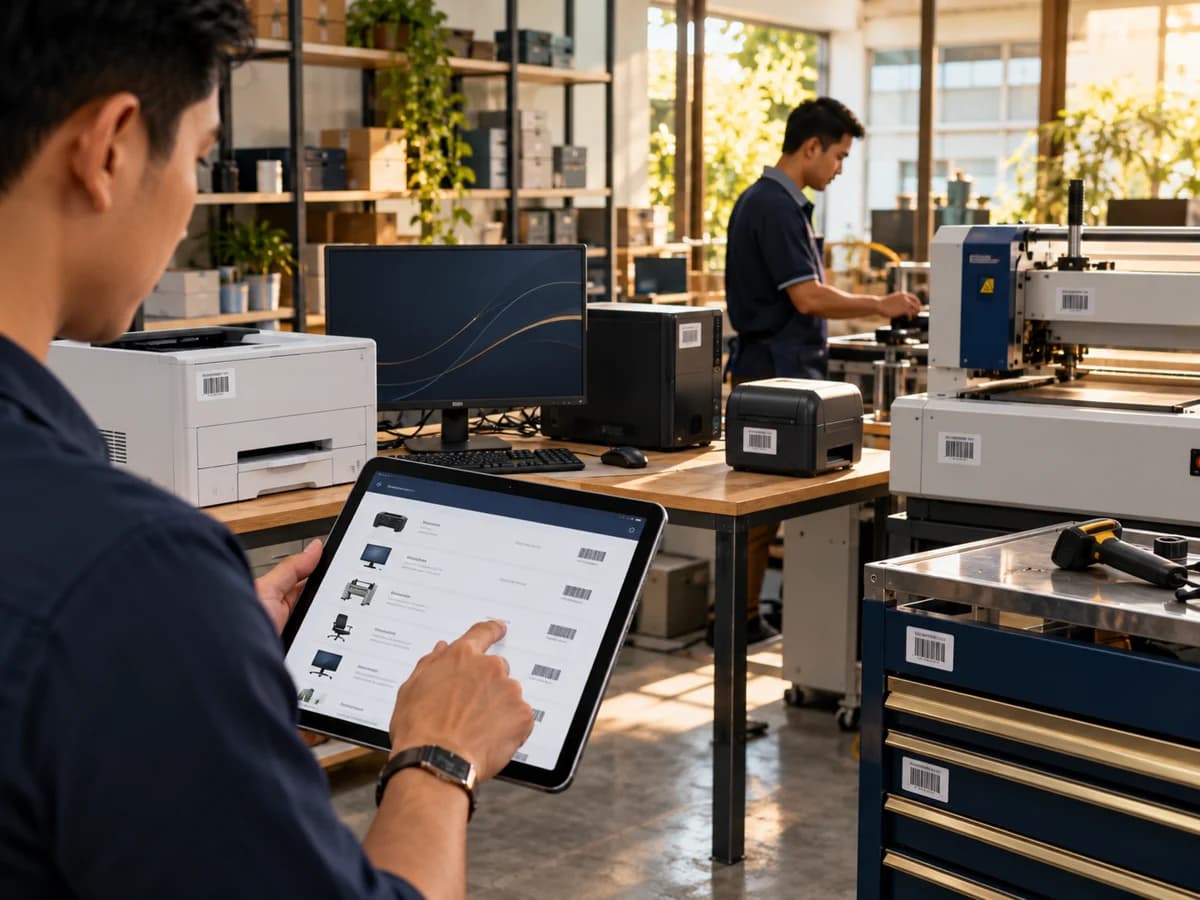 Fixed AssetsTrack equipment and vehicles from purchase to disposal.
- Asset register with barcodes
- Monthly depreciation
- Transfers, revaluation and disposal
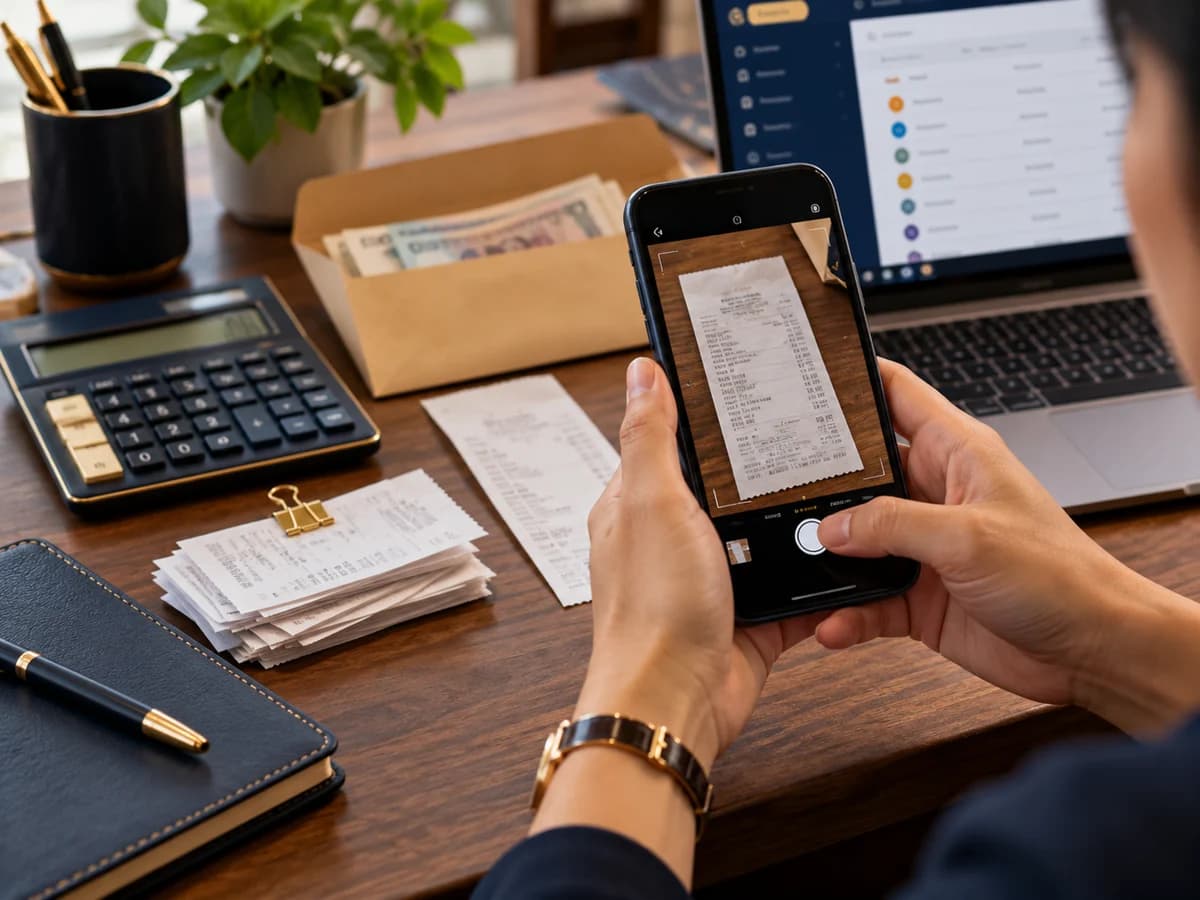 ExpensesStaff expense claims with receipt photos, petty cash and recurring bills, recorded in your accounts as they happen.
- Expense claims with receipt photos
- Petty cash with vouchers and cash counts
- Recurring bills such as rent
 ApprovalsDecide which documents need approval, by how much, and who approves.
- Approval rules by amount, branch and conditions
- Several approvers per level, escalation and stand-ins
- Approve from Telegram
 AutomationWhen something happens, tell the right people — rules you set up yourself.
- When → if → tell → then rules
- Overdue, low-stock and big-sale alerts
- Staff notices by bell, email, phone or Telegram
Connected modules
People & insight
Plan work, support your people and see the full picture.
 HR & PayrollRun your people and pay them correctly, including SSB and tax.
- Attendance, shifts and leave
- Payroll with SSB and income tax
- Recruitment and training
 ProjectsPlan work, log time and bill for it.
- Boards, lists and calendar for tasks
- Comments, mentions and reminders
- Timesheets and project billing
 Reports & DashboardsSee how the business is doing, today and over time.
- A dashboard for each role
- Sales, profit and stock reports
- Scheduled reports by email
 AIAn AI assistant and AI agents that work from your own records, with your own AI key.
- Ask Nexa AI assistant
- AI daily brief for managers
- AI reorder and payment-reminder agents
Sell by quantity or IMEI at the counter, on credit or by reservation, in any branch.
- Salesman accounts can open Mini POS by default, or Checkout if the organization chooses it; the POS menu scrolls so every item stays reachable on shorter screens
- Keyboard-first checkout and a touch-friendly Mini POS that loads more products as you scroll; phone POS product cards keep consistent heights with space for two-line names
- Sell with no stock when you choose, at the counter and on wholesale orders — for shops that do not enter stock: can't sell (default), ask first, or sell without asking, per branch, and each product can choose its own rule; the stock shows below zero until the next stock in fills it, and a cost price you set is used until then
- Till fields per branch: hide what a shop does not need — customer details, member scan, gift card, customer pay amount, split payment, bank transfer, drafts or suggestions — on Mini POS, Checkout and the phone app
- Type the cash the customer hands over and see the change to give, with any tax included
- Barcode and camera scanning, including box and carton barcodes
- Search and select individual IMEIs or serials in Checkout and Mini POS, loaded page by page as you search, when switched on for your organization
- The IMEI or serial number printed under each item on receipts and invoices, when switched on for your organization
- Wholesale sales with dealer pricing, credit limits and down payments, and an order paid now can be paid part in cash and the rest by bank transfer or a payment method; Wholesale and Both customers get a linked dealer profile, and existing dealers can be linked without losing invoice history
- An alert when a customer's balance approaches or exceeds their credit limit, when switched on for your organization
- Credit hold: a customer whose invoice is overdue past the days you set, or whom you put on hold, can still buy for cash but gets no new credit until someone you allow releases them (when switched on); customer details opened from Credit Hold return there with Back
- Duplicate customers: see customers entered twice with the same phone number or email, so the extra record can be corrected (when switched on)
- Back orders — record what a customer wants while it is out of stock; product searches keep your branch and chosen product selected, with loading and retry feedback; when enough stock reaches the branch the oldest are marked ready and staff are told, nothing reserved or charged until it is sold (when switched on)
- Gift cards: sell a numbered card for any amount with an optional customer field whose suggestions open when you click, type or use arrow keys, show their name in details and on the printed slip, and use a small Change or Assign customer action on existing cards with permission; take it at Checkout or Mini POS alone or with other payments, see its balance and history; the money waits as a liability until spent, and gift-card refunds go back onto the card (when switched on)
- Instalment sales (hire purchase): a down payment, then monthly, fortnightly or weekly instalments on a credit sale, with interest and a late fee if you charge them; payments go to the oldest instalment first and interest is booked as income when received (when switched on)
- Sale orders with deposits and partial pickup — set quantities across compatible batches, reserve only the units ordered and keep the rest available; choose serial-numbered items individually
- Draft invoices you finish later, with a Drafts picker in the mobile POS to find, reopen, update or delete a saved sale
- Buying used items from customers and trade-ins in one transaction, with collapsible sections on phones and a scrolling form followed by the payment balance and confirmation actions
- Returns, voids and refunds that keep the books straight
- A numbered, printable credit note for every return, when switched on for your organization; a credit note on its own (a price correction or goodwill) lowers what a customer still owes on an invoice
- Debit notes: charge a customer more after a sale — the customer owes it like an invoice and pays it the same way (when switched on)
- Rebates and dealer incentives: reward customers for what they buy in a month, quarter or year — by value or units, with reward steps — and apply the reward as credit on their invoices, never as cash (when switched on)
- "Often bought together" suggestions at the till, learned from your own sales and only for products in stock at that branch (when switched on)
- When a product is out of stock in the branch, the till offers the substitutes you chose that are in stock — the cashier picks one, nothing is swapped automatically (when switched on)
- Kits: gift sets, hampers and bundles sold as one item made of other products — assembled ahead into stock, or made at the till from the components when sold; the kit costs what its components cost, and the org admin picks the default (when switched on)
- Add-ons and notes on sale lines: extras a customer chooses with a product (toppings, size, spice level) with their own price, a choice can take a product from stock and can be asked for more than once (2 or 3 extra eggs), and a note per line such as "no spicy" — printed on the receipt; also on sale orders, quotations and Nexa One Market, where buyers choose them on the product page; each branch switches them on or off (when switched on)
- Auto, coupon and bundle promotions — online Checkout, Wholesale orders and sale-order collections apply eligible automatic discounts for the selected customer, segment and branch (a collection never below the deposit already paid), shows the promotion in totals and receipts, and rechecks before posting; each promotion can be limited to branches, customer segments and member types, with overall or per-customer usage limits
- Buy X Get Y deals: buy one get one free, buy 10 get 1, the cheapest item free or buy one product and get another — Mini POS adds a single free product to the cart by itself, once or every time per sale; a return takes the free value back when the deal no longer holds (when switched on)
- FOC free goods for distributors: buy 10 of product A and get 1 of product B, or spend over an amount and get free goods — the free goods are added on top as their own lines at price 0 at Mini POS, Checkout, Wholesale and the staff phone app, their cost is booked to its own account, a report shows what was given by promotion, product, customer, salesman and branch, and a return charges free goods the kept items no longer earn (when switched on).
- Manual FOC gifts at online Checkout, Mini POS and Wholesale are off by default; enable them in Organization settings. Link a gift to a purchase, record a reason and use direct permission or manager approval, with gifts shown by item name for review. Zero-price receipts, stock deduction and separate gift costs; linked gifts must come back with a returned purchase (when available).
- Staff are told in the app when a promotion starts and before it ends, with who is told and how early set by you (when switched on)
- Members, tiers and points you can redeem at the till
- Quantity-break prices and branch prices
- Price lists and a customer's own prices, given to one customer or a whole member tier, with dates they apply (when switched on for your organization)
- Suggested selling prices from received cost plus landed costs and markup; set the shared default in Settings > Organization, or save a receipt-specific markup and selling prices for its stock in Checkout and Mini POS. Other POs keep their prices; price cuts follow approval policies (when switched on)
- Price each product in its own currency — for example in MMK while the books are in USD; the till starts in the first item's currency and converts the rest at today's rate (when switched on)
- Every product has a category from one fixed list, so a shop selling many kinds of goods is found under each of them on Nexa One Market
- Group products your way: by brand and model, or by your own categories and sub-categories, which you can add and rename any time; one brand works across every product type
- Product variants such as shade and size; manage options and families in the staff phone app, choose a variant or serial at the till, and receive serial ranges
- Cash register opening and closing in a full-width view: staff count the drawer (optionally without seeing the expected amount), each opening is checked against the last close, bank deposits and safe drops are recorded on the register, and any difference is posted to Cash Over/Short with a reason, keeping the Cash account in step with the drawer
- Myanmar payment methods — KBZPay, WavePay, AYA Pay, CB Pay, MPU and cards: set up your own, show the merchant QR on the till, at restaurant and hotel bills, on wholesale orders and in the phone app, take part in cash and the rest by the method (also for restaurant bills charged to a hotel room), take the customer's transaction ID (never used twice), book the provider's fee, then check each payment arrived by hand or by importing the provider's statement (when switched on)
- A QR menu customers scan to see stock and prices, in 8 ready-made designs (lists, cards, photo gallery …) in your brand colours, chosen per branch; preview the complete printable poster on phones, tablets and desktops
- Receipt and invoice layouts for thermal and A5 printers; Android thermal receipts keep text and logos proportional to the selected paper width
- Open Printer Setup from the Android Profile page: connect a paired Bluetooth printer, choose 58 or 80 mm paper, preview and test receipts, share an A5 PDF and use the branch receipt layout; open the clearly marked Receipt fields and order control to see receipt details; authorized staff can change its fields, order, alignment and footer, while printer choices and automatic printing stay on the device
- Direct Bluetooth Classic ESC/POS receipt printing in supported Android and Windows Chrome browsers; Myanmar text printed as an image, with full-width product names and readable quantity and amount rows
- Barcode labels printed for any product, picked from the stock list
- Browse mobile invoices with rounded filters, clear amounts and load retry; open saved sales vouchers and reprint by Bluetooth or A5 without charging the customer again; review completed sales and reprint saved invoices in 75%-height previews; Print, Share and Done stay below the scrolling sale receipt
- All Invoices shows the buying cost for used purchase invoices and always displays labelled Previous / Next controls with a page indicator; unavailable directions are disabled, including single-page and empty results; supplier purchase details return to the same invoice filters, dates, search and page
- Every invoice shows where its order came from: a Market or Telegram badge with the order number, and an "Order from" filter on All Invoices for shop, Market or Telegram
- Book & reserve on Nexa One Market: travel packages, hotel rooms, classes, rental items, appointment services and restaurants shown like products, with their price and an optional photo (else the shop's photo or logo); tapping one opens its booking with that item already chosen
- Choose Retail, Wholesale or Both in a customer form dropdown that follows your selected theme
- Create Promotion and Add Customer use matching buttons in your selected theme
- Promotion Type, Scope and Discount Type dropdowns follow your selected theme with bold options and clear selection highlights
- Tax added on top of the price or included in it, as your business needs
- Receipts sent from any device to a till printer on the shop network
- Birthday coupons for members, points that expire after the months you choose, and tiers that upgrade automatically
Table service with kitchen tickets for a restaurant, and rooms, bookings and check-out for a hotel or guesthouse — each bill recorded in your accounts.
- Restaurant outlets inside your branches — a dining room, bar or counter — each with its tables and its own service charge
- A menu built from your products: dishes made to order, or stocked items such as bottled drinks that leave stock when the bill is settled
- Menu options and add-ons — size, spice level, extra egg — set once and used on any dish, required or optional, each with its extra price; the till asks for them and they show on the kitchen ticket, the kitchen screen and the bill
- Recipes for dishes and add-ons: each ingredient and how much one portion uses; when the bill is settled the ingredients leave the kitchen's stock, each dish shows its cost and food cost %, ingredients that ran short are listed, and food made then thrown away is recorded as waste
- Combo meals: a set such as "Lunch set" asks for its choices — a main, a drink — each choice giving a dish from the menu with any extra price; at settle each chosen dish takes its own stock or recipe, and a dish switched off is not offered
- Open an order on a table or as a takeaway, send dishes to the kitchen with a printed kitchen ticket, add more later, and void a sent dish with a reason (a void ticket prints too)
- A kitchen display screen for each outlet: cooks tap each dish from New to Preparing to Ready, the waiter sees "Ready" on the till and marks it served — printed kitchen tickets become optional — cooks and waiters can use it on the staff phone app too, and hotel housekeepers see and tick off their room tasks there
- Kitchen stations — grill, bar, drinks — chosen by dish or category: each station gets its own kitchen ticket and its own kitchen screen
- A floor plan of each outlet with every table in its place, coloured by state — free, guests, reserved, cleaning or out of service — and tables marked cleaning after the bill when you want
- Change table at any time: move an order to a free table, merge two tables into one bill, or move chosen dishes to another table — the kitchen screen follows and a table-change slip prints for dishes already sent
- Split the bill at one table: move chosen dishes, or part of a dish's quantity, onto a separate bill, so each guest pays their own with their own receipt; the main bill is paid last and a separate bill can be merged back
- Guests at the restaurant: put the customer on the order to see their allergies and preferences, how often they come and what they usually order; members earn points on the food when the bill is settled, and can pay the bill with their points (each restaurant chooses a discount on the food or a payment, how much of a bill points may cover, and whether that part still earns points)
- Restaurant reports: sales by dish, category, waiter, table, hour, payment and order type, food cost % from what each dish actually took out of stock, voids and waste, and menu engineering — stars, plowhorses, puzzles and dogs
- Restaurant delivery: take a delivery order with the address and phone, add the outlet's delivery fee (not taxed), send it out with a driver and mark it delivered or failed — paid before it leaves or cash on delivery; the customer gets a link to follow the order (texted when it leaves)
- Table QR ordering: guests scan the QR on their table, see the menu and their bill, add a note and send an order — staff accept it before anything reaches the kitchen, and the bill is still paid at the till
- Table bookings: book a table for a time with the party size and notes — a table is never booked twice for overlapping times — see the next booking on the floor, and seat the guests straight into an order, or mark a no-show; buyers on Nexa One Market can also ask for a table from your store page, and you accept it into a booking (when switched on)
- Food on Nexa One Market: dishes made to order are never counted as stock, so buyers can always order them while the dish is on; one press sends the order to the kitchen as a takeaway or delivery order of the restaurant, billed at the restaurant till, and the buyer follows it in the app; on the Market website, buyers choose required sizes, spice levels and optional extras, see their prices, and send those choices through to the kitchen
- Seven restaurant staff roles with assigned outlets and kitchen stations, waiter-owned orders, and separate controls for discounts, voids, seating and table changes; staff sign in directly to their restaurant workspace, including with two-step sign-in, and the sidebar shows their permitted pages
- Each order has its waiter: hand a table to another waiter, see only your tables, and take a tip on top of the bill — tips are kept for each waiter and paid out from a branch's cash or bank
- Bill and settle in cash, by bank, or cash with the rest by bank; the bill shows the service charge and tax and is recorded in your accounts, with stocked items taken out of stock
- A settled bill can be voided from All Invoices; the books are reversed and the cost of what was already served is recorded as waste
- Hotel properties: room types with a price per night and a weekend price, and the rooms of each type
- Bookings by date — a room can never be sold twice for the same night — with the price of each night kept as it was booked
- Front desk with today's arrivals, guests in house and departures, every room as a card coloured by today — free, reserved, occupied, due out, needs cleaning or out of order — and a two-week room board where each room is set clean, dirty, inspected or out of order
- Check-in, extras during the stay (laundry, minibar), changing the departure, and check-out with a bill for the nights used; later nights go back on sale
- Deposits on a booking — cash or bank, with a printed receipt — taken off the bill at check-out so the guest pays only the balance; a manager can refund one, or keep it when the booking is cancelled or a no-show
- Charge a stay to a company or regular customer account at check-out — it goes on their payment terms and credit limit and is collected later with your other receivables
- An occupancy report for each property: rooms sold, occupancy, room revenue, average rate (ADR) and revenue per room (RevPAR) by day and room type, with what is already booked ahead and a CSV download
- Housekeeping: the day's cleaning tasks made in one step (stayover or turnover), assigned, done and inspected by someone else, maintenance requests that can take a room out of order until fixed, and lost and found
- Hotel management summary: bookings and cancellations, no-shows and their fees, average stay and booking lead time, revenue by booking source, billed revenue, minibar cost, housekeeping, repairs and returning guests — with CSV
- Online booking requests: a link or QR guests use to ask for a room type and dates; staff accept with a room or decline — no double bookings; the guest is told the answer by SMS and email; buyers on Nexa One Market can also ask for a room from your store page into the same list (when switched on)
- Room QR: the guest in a room asks for cleaning, towels, a repair or a service; the front desk marks it done or charges it to the stay
- Group and corporate bookings: several rooms booked together (all or none), checked in together and checked out on one bill — paid, from deposits or charged to the company account
- Restaurant to room: a hotel guest's restaurant bill charged to their room at the same branch and paid with the stay at check-out
- Guest services and minibar: laundry, spa or transfers charged to the stay from your own list, and minibar items taken from stock with their cost booked when charged
- In-house changes: move a guest to another room for the nights left (keep the booked price or charge the new room), and add early check-in, late check-out and extra beds at your own fees
- Guest profiles: ID document (the number kept encrypted, only its last four shown), nationality, preferences and VIP, with every stay, night and amount spent — returning guests are found on a new booking, and the front desk warns when no ID is on file or it expires before the guest leaves
- Rate plans and seasons: price rooms by plan (e.g. 10% off non-refundable) with its own cancellation policy, set season and holiday prices by date and room type, and see the fee a late cancellation or no-show owes — every booking keeps the prices it was made at
- A night audit that closes each hotel day: tonight's occupancy and room revenue, deposits held, rooms to clean, arrivals who did not come (marked no-show in one step) and guests past their departure
- Allotments: hold a number of rooms of a type for a travel agent or company on each night; nobody else can book them — at the front desk or online — until their release day, bookings for the agent use them up, and unused rooms are freed automatically (when switched on)
- Hotel staff roles: six core roles and two specialists, assigned-property access, attendants working on their own tasks, separate supervisor inspection and maintenance assignments, and individual permissions for discounts, deposit refunds and company billing; existing roles keep their access until restricted controls are enabled
- Restaurant and hotel bills count in the cash register, sales reports and the books like any other sale (each switched on for your organization)
Win customers and keep them coming back.
- Customer records with a full 360 view
- Leads with scoring and automatic assignment
- Deals in a sales pipeline, with quotations
- Tasks, activities and a calendar
- Email and SMS campaigns with A/B testing
- Separate organization switches for SMS Settings and Marketing & SLA, managed by the super admin; turning a settings page off preserves saved configuration and ongoing campaigns
- Automated customer journeys with a themed Trigger dropdown, bold padded choices and clear selection highlights
- Surveys and NPS, with themed survey and question type dropdowns, bold padded choices and clear selection highlights
- Support cases with response-time targets and themed Category and Channel dropdowns with bold padded choices
- Teams, sales targets and commission, with themed dropdowns for members, territories, quota owners and lead-assignment rules
- Choose whether a commission rule applies to the organization, a team or a person using a themed dropdown with bold padded choices
- Sales forecasting and analytics
- Field sales: add salesmen from staff assigned to the selected branch, with a territory and vehicle, and retailers assigned to them with outlet type, visit frequency and location
- Customer map: see every customer on a map, coloured by their salesman, to plan visits by area (when switched on)
- Visit proof: a salesman's day replayed with each stop matched to the customer they visited (when switched on)
- Salesman targets and incentives: monthly, quarterly or yearly targets with reward steps, nightly progress, estimated rewards from saved progress with the last update time, early warnings for anyone falling behind, and finalized rewards approved and paid through payroll after the period closes (when switched on)
- Visit plans and check-in: plan each salesman's day of customer visits; the salesman checks in on his phone with its location, records the outcome and a photo, and managers see how far from the customer each check-in was (when switched on)
- Route suggestions for visit plans: the stops still to visit put in the shortest order — by road or as a straight line, and the salesman's customers due a visit by how often they should be visited — never visited and most overdue first (when switched on)
- Pharma distribution: doctors with clinic, specialty, rep and visit frequency; medical rep visits with location, the products detailed and free samples that leave stock and book their cost — with a monthly limit per doctor and approval above a set cost (when switched on)
- Van sales setup: areas by division, township and zone (only the levels you use), each branch's routes with their customers in visit order, and sales teams of a leader, salesmen, drivers and helpers with their van (when switched on)
- Van trips: open assigned trips within the web POS or from the staff phone app, with pre-order quantities shown separately from other held stock; load a team's van with pre-orders and stock to sell, sell, deliver and collect along a one-day or several-day route with each person's cash kept in their own account, then count the stock and cash back in; check-in photos the branch manager approves (when switched on)
- Salesman phone app: today's stops in order with call and directions, check in with a photo, sell from the van, deliver pre-orders and collect — saved without signal and sent later (when switched on)
- Companies, contacts, tags and your own custom fields
- Filter contacts by company in a dropdown that follows your selected theme, with bold options, a selected checkmark and individual hover and keyboard focus highlights
- Filter leads by source in a dropdown that follows your selected theme, with bold options and individual selection, hover and keyboard focus highlights
- Create leads with themed Source, Shop and Assigned To dropdowns; the assignee list follows the selected shop
- Create opportunities with themed Currency, Lead, Customer and Assigned To dropdowns while keeping the customer linked to a converted lead
- Create quotations with themed Opportunity, Customer and Currency dropdowns and a matching Valid Until date field
- Build customer segments with themed Field and Operator dropdowns, retaining grouped fields and rules for each field
- Choose a campaign's customer segment from a themed dropdown with bold options and customer counts
- Email sync: mail with your customers, leads and contacts lands on their CRM timeline — forward or BCC it to your own inbound address, connect a mailbox over IMAP, or both; only mail that names a CRM record is kept (when switched on)
- Your own lists of lead sources, case categories, channels and activity types
Manage repair jobs, technicians and warranty claims.
- Service jobs from intake to invoice
- Parts used, labour hours and job profitability
- Technician dispatch board
- Warranty tracking per product component
- Warranty claims: replace, repair or return to supplier
- Service contracts with scheduled visits and billing
- Appointments: book customers with staff, rooms or machines by service and time — never double-booked — with SMS and email reminders, a public booking page per branch, booking from your store on Nexa One Market (the customer picks a free time in the app and is told when it is confirmed) and an after-visit survey
- Visit billing for salons and clinics: one bill for the customer's services and products sold that day, walk-ins, staff commission per service and a monthly staff sales and commission view
- Memberships and packages: monthly or yearly memberships and visit passes, check-in by membership number, member card or phone, freeze and renew, salon packages that pay a booked service, and income booked at sale or month by month
- Gym and studio classes: weekly classes with a trainer, a room and a number of places, members booked on them with a waiting list that moves up when a place is cancelled, a trainer never on two classes at once, and attendance that counts a visit on the member's membership; buyers on Nexa One Market can also book a place or join the waiting list from your store page (when switched on)
- Optical shop: eye-test records for each customer (SPH, CYL, AXIS, ADD and PD), glasses orders that hold the frame from stock and take a deposit, followed through the lab and handed over with one invoice — cancelling puts the frame back on sale and refunds or keeps the deposit
- Clinic: each patient's private medical profile (allergies, conditions, current medicines, consent), consultations with vital signs, findings, diagnosis and plan, medicines, lab tests with results and procedures, a printed prescription, and one bill per visit with medicines from stock — every record opened is logged
- Jewellery and gold: the day's gold and silver rate per gram by purity re-prices every piece at once, pieces priced by weight × rate plus wastage, making charge and stones, grams in stock, and old gold bought back by weight at the day's buy rate and sold to a refinery with its gain or loss
- Laundry and dry cleaning: an item × service price list by the piece or the kilo, orders taken in with a tag for every piece and stains noted at the counter, express surcharge, a text when the order is ready, payment at drop-off or collection, and clothes handed back only once paid
- Fuel station: tanks and nozzles per branch, a pump shift with each nozzle's opening and closing meter and test litres, sales at the pump price posted as one paid sale that takes the fuel out of stock, cash and card taken, the cash over or short booked, and tank dips beside the book stock
- Farming and livestock: fields with their area, crop seasons that take seed, fertiliser and chemicals from your stock and record the cash spent on them, harvests into stock at what the crop cost, a failed crop written off, each season's cost per acre and per unit and what its harvest sold for, and an animal register with weights, daily gain, health and vaccinations due
- Rentals: items you hire out (vehicles, equipment, lockers, rooms) with hourly, daily, weekly and monthly rates, contracts that can never book one item twice for the same time, deposits held until the end, hand-over and return with condition and photos, late and damage fees, bills so far for long rentals (paid or on account), a final bill that uses the deposit and gives back the rest, and how much each item is used; buyers on Nexa One Market can also ask to rent items for a time from your store page, and you accept the request into a contract (when switched on)
- Catering: menu packages priced per guest, event orders from quote to confirmed with a deposit held until the end, the ingredients each event needs from your recipes against what is in stock (sent to material planning in one click), staff for the event with clashes shown, and one final bill that takes the ingredients out of stock, uses the deposit and gives back the rest
- Real estate: buildings and land you own or manage for owners, units listed for rent or sale with viewings, tenancies with deposits and rent billed automatically each month (a part month by days), repairs, owner statements with your management fee and payouts, and agency sales that bill your commission and pay the agent's share through payroll
- School and training centre: students with the guardian who pays and health notes, courses and terms, classes with teachers and places, enrolment, daily attendance, test marks with weights, grades and report cards, and term fees billed to guardians as invoices
- School parent portal on Nexa One Market: a parent links their child with a one-time code from the school and sees only that child — attendance, the marks and report cards the school chooses to share, fees, and notices sent to all parents, a course or a class; an absence alert on the phone; fees paid at the school or by bank transfer with a slip photo the school checks; health notes are never shown (when switched on)
- Travel and ticketing: bookings with flights, buses, trains, hotels, tours, visas and insurance, each with its supplier, ticket number, cost and price, passengers with passport warnings, a documents checklist, deposits, billing as agent (margin as commission) or principal, and what is still owed to each supplier
- Travel packages: ready-made trips with their services and departures, each with seats that are never oversold; book a departure at the counter, or let buyers on Nexa One Market send a trip request that holds their seats until you accept it, with the deposit paid by bank transfer and a slip photo you check (when switched on)
Deliver orders, collect cash and let customers follow along.
- Delivery orders from invoices and sale orders
- Delivery zones to group deliveries by area (when switched on)
- A planning board of routes by date, showing each driver and vehicle (when switched on)
- Partial delivery — ship one invoice over several trips, choosing how much of each line goes on each, and still ship the rest after part of it is returned (when switched on)
- Failed deliveries and returns — say why a delivery failed, record items the customer refused at the door — even before the delivery is invoiced (they pay only for what they keep) — and count goods back in when the van returns, with damaged items held off sale; the delivery note and the customer's tracking page show what came back (when switched on)
- Courier companies on Nexa One — connect to a courier company that also uses Nexa One, send it your invoiced deliveries with one press (you or the buyer pays the courier fee, your choice), see each parcel move on your own delivery, the cash it collects paying the invoice, and record its payments with the fees it kept (when switched on)
- Routes in driving order with load planning
- Routes on a map, with a suggested shorter stop order and one-tap navigation in Google Maps (when switched on)
- Distances by road: delivery charges by distance and suggested stop orders can use real road distance — from the Nexa One map server for Myanmar or from Google with your own key — instead of a straight line (when switched on)
- Live tracking: see your drivers and salesmen on a map while they work, and replay any day's path, distance and stops (when switched on)
- Drivers share their location from the web or the Android app, which keeps sharing with the screen off — a position every 30, 60 or 120 seconds (your choice), also when standing still
- Customers can see the van approaching on their tracking link (when you switch it on)
- Vehicles, fuel and maintenance
- Cash on delivery with driver handover
- No rider needed: a shop that delivers itself marks a delivery delivered and takes the cash at the door straight into its own register (or a bank account), or leaves it owing on the invoice, from the web or the staff phone app (on unless switched off)
- A driver app on the phone: today's stops in order, call and navigate, collect cash, mark delivered with a photo and the customer's signature, or failed with a reason — each driver can change only their own deliveries
- A tracking link customers open without an account
- Printed delivery notes with a QR code
- Courier company add-on — run a delivery business for other shops: merchants with their own rules, a rate card by city, township, weight, size and distance (or the fee agreed by phone), parcels tracked from pickup to the door, and driver runs that pay shops a cash advance at pickup and collect cash at the door into the driver's cash round, fee invoices to merchants, and paying each shop its cash on its own schedule with a printed statement; optional tracking links for receivers, sorting hubs, and a portal where merchants enter their own parcels; drivers work their runs in the Android app, also without signal; enter many parcels at once from a spreadsheet (CSV), checked before they are created
- Deliveries for everyone: take parcels from shops on Nexa One, from shops that are not, and from walk-in or phone senders; a rider picks each one up or the sender brings it to the office; the shop, the receiver or the sender pays the fee; pay the shop later, or pay the goods price first and collect it at the door; when a receiver refuses, the shop pays the delivery fee and, if you choose, a return fee; people can also ask you to send a parcel from your store on Nexa One Market (they see your rate card fee, you accept it into your parcels, they follow it in the app and can pay the fee by bank transfer with a slip)
- Riders on the phone: a pickup shows the fee to take from the sender, a rider can record a parcel from a walk-in or phone sender, and pickup runs only take parcels a rider collects
- Proof of delivery for courier parcels: the driver takes a photo and the receiver signs on the phone, with who received it; the courier company chooses whether a photo, a signature or either is required, and the shop sees the proof on its portal
- Hub-to-hub manifests and delivery service level for courier companies — load parcels at one hub by scanning, send them to another, receive them by scanning and see which went missing; parcels with several boxes, and the share delivered on time by merchant and township against your own promise in days
Know what you have, where it is and what it is worth.
- Your own product categories, each with a colour and an icon for any kind of shop; the mobile item type list shows names without technical IDs. Web product and family forms use the available workspace, with side-by-side sections on wide screens and stacked sections on smaller screens; Cancel returns to product management without submitting the form
- Manage products in the Android app: search or scan barcodes, view details with a photo summary, clear pricing and grouped information cards, choose More types in a searchable list matching the Models brand chooser, add products and edit names, categories and prices; find a brand from More brands on the Models page using a searchable chooser, and choose the brand again while adding a model in a taller searchable picker with clear selection and a fixed Back button; tablets show two product columns when space allows, with side navigation on wider screens; Back leaves product management after switching sections; Products is the first dashboard quick action when your role has access
- Browse branch stock from the web POS with search, type, status and source filters, full matching counts and page controls; select a product to see remaining, available-to-sell and not-available quantities in base units across all batches and pages for the selected branch, with reserved, expired, quarantine and pending-serial breakdowns, and export that product; Android inventory cards and product details show product photos, with a placeholder when a photo is unavailable
- Serialized items and quantity stock, with units such as piece, box and kilogram
- Separate page access for Stock-In Records, Add New Stock, Add Used Stock and Opening Stock Mobile Add New Stock opens in a modal sheet and groups product, warehouse, quantities, pricing and payment into clear cards, with total cost and the receive action always visible.
- Multiple warehouses, transfers between them and stock in transit
- Every new branch comes with its own warehouse, which you can rename, and when a branch has only one warehouse, forms select it for you and do not ask
- Bin locations and a quarantine hold for goods awaiting checks
- Stock valued FIFO or at weighted average cost — the org admin chooses; average is worked out again after each delivery, serial-numbered and used items keep their own cost (when switched on)
- Expiry dates with first-expiry-first-out selling and expiry alerts
- Save your batch-tracking preference: choose a stock batch at the till, or let the system pick the nearest expiry automatically
- Medicine details for pharmacies — generic name, ingredient, strength, dosage form, manufacturer, registration with expiry reminders, prescription-only (Rx) marked at the till, search by generic name and the manufacturing date of each delivery (when switched on)
- Lot tracking that answers which customers received a lot
- Cycle counts, including blind counts
- Stock adjustments with approval
- Reorder points that suggest purchase orders
- An AI agent that prepares draft purchase orders from your reorder points, with the quantities and last prices from your own records and a short explanation for each — nothing is ordered until you apply it (when switched on)
- Distribution centers that suggest what to send to the branches they feed (when switched on)
- Pick lists that gather what pending deliveries need from one warehouse, shelf by shelf, with scanning, short-pick reasons and a printable list; then pack each delivery and send it from a dispatch station (when switched on)
- A warehouse app on the phone: pick with the camera scanner and pack each delivery, put stock away into bins, and count shelves — blind counts stay blind (when the tools are switched on)
- Put-away suggestions for stock received without a bin — a bin already holding the same item, else the first with room (when switched on)
- Damaged stock: search and choose the item to report, take broken or suspect units off sale with a reason, hold them in a damaged-goods bin, then release them, write them off or return them to the supplier — part of a batch can be held on its own (when switched on)
- Electronic shelf labels of any brand show the till's price — the branch price, a running percentage promotion and whether it is in stock — updated within minutes; Nexa One sends them to the label server, the label server reads them from a feed, or you import a CSV (when switched on)
- Low-stock alerts, with amber low-stock and red out-of-stock warnings in the mobile inventory screen
- Stock aging, slow and dead stock, ABC/XYZ and turnover reports
- Stock value checked against the accounts
- Trace any serialized unit by its IMEI or serial number, from purchase to sale
- A stock card for every product: each sale, receipt, transfer, adjustment and return in order with the balance after it, and the stock you held on any past day
- Many serials at once on Add New Stock and purchase-order receiving: a range from the first serial (HW-0001 × 50) or a pasted list, repeats skipped
- Reconditioning: record a repair on an item or on part of a batch, paid in cash or by bank — the cost goes onto exactly the units repaired
- Expired stock is blocked from sale automatically
Order from suppliers and receive goods at their true cost.
- Purchase orders by branch, with an All Branches view for organization admins, and partial or full receiving
- Order and receive in any unit — box, carton or piece — with purchase quantities you can clear and retype, whole or decimal as the unit allows, and a warning before you receive more than was ordered
- Tax on purchase orders: add your tax rate to an order, then claim it back as input tax or add it to the cost of the stock — goods receipts, supplier invoices, payables, supplier returns and the tax report all include it (when switched on)
- Supplier invoices and payments
- Landed cost spread across a delivery for freight, duty and fees
- Supplier returns for credit, cash, bank or replacement
- Stock-in for new, opening and used stock
- Supplier history and outstanding payables
- Purchase price history per product and supplier, read from your own goods receipts
- Supplier debit notes: claim money back from a supplier and lower what you owe on their bill (when switched on)
- Three-way match: enter the total on the supplier's own bill and it is checked against what was received at the order's prices — a bill outside your tolerance is held and cannot be paid until someone keeps your figure or accepts theirs (when switched on)
- Supplier rating: each supplier scored on delivering on time, in full and without returns, with an A–D band and a CSV (when switched on)
- Requests for quotation: ask several suppliers for prices on a list of products, enter their answers, see the cheapest per line in your currency and award the lines to make draft purchase orders (when switched on)
- Blanket orders: agree quantities and prices with a supplier for a period, then make draft purchase orders at those prices as you need the goods, never more than is left (when switched on)
- Landed-cost estimate on a purchase order: expected freight and duty split into the real cost of each unit before the goods arrive, then compared with what was actually posted (when switched on)
- Drop shipping: a purchase order the supplier delivers straight to your customer — the goods received are held for that customer, then invoiced to them on terms with one press, so stock, the supplier bill and the customer invoice agree (when switched on)
- Consignment stock: take goods on consignment and pay the supplier only for what you use — received goods are in stock but owed on a consignment account, and one press settles what was sold or used since last time into the supplier's bill (when switched on)
- Purchase requisitions: staff ask for goods with an estimated cost, a manager approves, and a buyer turns the request into a purchase order in one click (when switched on)
Turn materials into finished goods and know what each run cost.
- Bills of materials
- Work orders from release to completion
- Routing and work centres
- Material issue and return
- Quality checks, scrap and rework
- Production cost variance
- Material planning (MRP) — what to buy and make, how much and by when, from the production plan, reorder points and the demand forecast, with supplier lead times; proposals become draft purchase orders and planned work orders, and can run every night (when switched on)
Bring your existing data into Nexa One from a spreadsheet, when switched on for your organization.
- Import products, customers, suppliers, opening stock or your chart of accounts from a CSV or XLSX file, with a preview before anything is written and a progress bar while it runs, when switched on for your organization
- Count opening stock in each product's own units, such as kilograms or boxes
Double-entry books that post themselves from every sale and purchase.
- Automatic double-entry posting from sales, purchases, payroll and stock
- Chart of accounts and manual journal entries, with themed account dropdowns, bold padded choices and clear selection highlights in new and edited entries
- Filter the General Ledger by account using a themed dropdown with bold padded choices and an All Accounts option
- Trial Balance has aligned fiscal-year, date and multi-currency controls, with themed fiscal-year choices and clear selection highlights
- Account mapping for every kind of transaction — choose which accounts sales, purchases, returns, deposits, payroll, assets, services and deliveries post to, for the whole organization or one branch
- Quick income and expense entry
- Receivables and payables with aging and payment reminders
- An AI agent that prepares a payment reminder for each customer with overdue invoices — the invoices, amounts and reminder level from your own records, the wording by AI without seeing names or amounts — for you to read, edit and email (when switched on)
- Profit and loss, balance sheet, cash flow and changes in equity; choose a Profit & Loss fiscal year from a themed dropdown with bold padded choices
- Budgets with alerts and themed Fiscal Year and Department dropdowns with bold padded choices when creating a budget
- Tax reports, with input tax read from your own books
- Fiscal years with closing and locked periods
- Multi-currency with rates frozen at the time of each sale
- Branch finance: cash, stock, income and profit per branch
- Opening balances, and currency revaluation for unrealised exchange gains and losses
- Payments of invoices and purchase orders in another currency at the rate of the payment day, with the realised exchange gain or loss booked automatically
- Books export: the chart of accounts and the journals of any period as import files for Xero or QuickBooks Online, checked before you download, with themed Format and Date Style dropdowns and bold padded choices (when switched on)
- Bank reconciliation: import the bank statement, match each line to the books (suggestions first), record bank charges in one step, and reconcile with a printable report (when switched on)
- Recurring journals: entries that repeat each month, quarter or year, prepaid or accrued amounts spread evenly over periods, and accruals reversed on the first of the next month — posted every morning on their day (when switched on)
- Withholding tax: keep back tax when you pay a supplier — the bill is settled in full, the tax waits in its own account until you pay it over, and each withholding gets a printable certificate and a CSV for filing (when switched on)
- Cost centres: label journal lines, income and expense entries and recurring journals with a department, project or vehicle, and read the profit and loss per centre beyond the branch (when switched on)
- Recurring invoices: bill a customer the same amount every month, quarter or year — rent, subscriptions, fixed fees — as ordinary invoices on terms, issued every morning on their day (when switched on)
- Loans: record money the business borrowed, see the repayment schedule (equal payments or equal principal) and pay each instalment with the principal and interest posted separately, or pay it off early (when switched on)
- Leases: premises, vehicles or equipment the business rents, either on the balance sheet (a right-of-use asset and a lease liability, with the monthly interest and depreciation posted for you) or simply as rent — the org admin chooses the default and each lease can differ (when switched on)
- Netting: settle what a business owes you against what you owe it — a customer invoice against a supplier bill — without moving money (when switched on)
- Cheque register: cheques taken from customers and written to suppliers, post-dated ones included — deposit, clear or mark bounced; the payment is booked only when the bank clears the cheque, a bounce reverses nothing and a bank charge can be recorded (when switched on)
- Year-end checklist: before closing a fiscal year, see everything still open — draft journals, depreciation not posted, bank statements not reconciled, open registers, waiting approvals — each with a link to fix it (when switched on)
- Indirect cash flow: profit adjusted to cash — non-cash items, changes in receivables, stock and payables, investing and financing — beside the direct statement, with a check that it ties to the cash (when switched on)
- Inter-branch accounting: stock received from another branch moves its cost between the two branches' books and records what each branch owes the other, so each branch's stock and profit stay right (when switched on)
- Data feeds for Power BI, Excel and Looker Studio: give a reporting tool its own key to read sales, invoices, stock, products, customers, purchases and journals, read only and every read logged (when switched on)
Track equipment and vehicles from purchase to disposal.
- Asset register with categories and barcode labels, themed Category/Status/Shop filters and bold padded dropdown choices throughout New Asset
- Straight-line, declining-balance and units-of-production depreciation
- Choose depreciation batch and report categories and shops from themed dropdowns with bold padded choices and clear selection highlights
- Depreciation posted every month automatically
- Transfers between branches
- Revaluation, disposal and write-off, with consistent search and status controls on the disposal list
- Maintenance log
- Asset check-out: hand an asset to a person with a due-back day and its condition, check it in when it comes back, insurance and warranty end dates with reminders, and a notice when an asset is not returned on time (when switched on)
Staff expense claims with receipt photos, petty cash and recurring bills, recorded in your accounts as they happen.
- Staff claim back money they paid for the business — category, date, amount and a photo of the receipt, from the web app or the till
- A manager or accountant approves or rejects each claim, then pays it back in cash or by bank; the expense is recorded on the day it was paid, and only the org admin may approve their own claim
- Expense claims can go through your approval rules by amount, with up to three levels
- Petty cash funds for each branch, each with its own cash account: top up from the till or the bank, spend with a voucher and receipt photo, and count the cash — a voucher can never take more than the box holds
- Recurring bills such as rent, internet or a yearly licence: each month, quarter or year the bill waits until someone pays it or skips it
- Expense categories you name yourself, each recorded in the expense account you choose
- Cash advances for staff before they spend: paid out from cash or the bank, claims sent against the advance, then settled once — the cash not used comes back or the extra is paid out (when switched on)
- Claims in another currency: staff who paid abroad claim in that currency and are paid back at the rate when they claimed, with the foreign amount kept on the claim (when switched on)
- A monthly budget for each expense category, with spending against it each month and an Over budget warning on claims waiting for approval (when switched on)
- My expenses in the mobile app: send a claim and photograph the receipt on the spot
Decide which documents need approval, by how much, and who approves.
- Approvals you set up yourself: choose which purchase orders, stock adjustments, stock counts, quotation discounts, leave requests, salary advances, timesheets, expense claims, credit-limit increases and salary raises need approval (by amount, percent, days or hours, and branch), and who approves at up to three levels — with an inbox, daily reminders for anything still waiting, a full history, and no self-approval (when switched on)
- At the till, a discount over the limit or a wholesale order over the customer's credit limit can be sent to a manager for approval instead of losing the sale (when switched on)
- Sales returns with a large refund wait for approval: nothing is returned or refunded until it is approved, and then the return is done exactly as asked (when switched on)
- Stock transfers above the value you set wait for approval: nothing moves until it is approved, and the stock is checked again when the transfer runs (when switched on)
- Price cuts on a product, its branch prices, its unit prices or a customer price list beyond the percent you set wait for approval; the old prices stay until it is approved, and a price rise never needs it (when switched on)
- Purchase requisitions above the amount you set go to the approvers you choose, for example the manager then finance, before anything is ordered (when switched on)
- Supplier payments and customer payments above the amount you set wait for approval and are recorded only once approved (when switched on)
- Sale-order deposit refunds, income and expense entries and manual journals above the amount you set wait for approval — nothing is paid or posted until approved (when switched on)
- Documents in the categories you mark, such as contracts and licences, wait for approval before others can see them; a new version waits too while the approved one stays in use (when switched on)
- A level can be the head of the requester's department: set each department's head, and when the head is the one asking, their own manager approves instead (when switched on)
- Rules with conditions: a rule can also ask for a customer or supplier group, a product category or brand, the role of the person asking or the kind of document — for example dealer orders for key accounts go to the sales manager only, others also to finance (when switched on)
- Several approvers on one level, either any one of them or all of them — for example the branch manager and finance must both approve (when switched on)
- Escalation: a request not decided within the hours you set is also sent to the person or role you choose, and whoever decides first decides (when switched on)
- Stand-ins: an approver who is away hands their approvals to a colleague for chosen dates; the org admin can set one for anyone (when switched on)
- Approve or reject from Telegram with one tap; payments, refunds, journals, salary raises and expense claims are always decided in the app (when switched on); managers also approve, reject or withdraw requests in the Nexa One staff phone app
- Each request shows the document, its amount and every level's decision, and the person asking is told the outcome
When something happens, tell the right people — rules you set up yourself.
- Automation rules you set up yourself: when a sale is made, a customer pays, an invoice is overdue for the days you choose, stock reaches its reorder point, goods are received, a delivery fails or an expense claim is sent — tell the right people (when switched on)
- Optional conditions on each rule: amount, branch, customer or supplier group, sale or wholesale, cash or credit, payment method, the role of the person who made it, product category or brand
- Tell the record's own person — the customer's salesman, the driver, who raised the purchase order or the person's manager — everyone with a role (optionally only that branch's staff) or named people, by the bell, email, phone notification or Telegram as each person chose
- Write your own message with the record's number, customer, amount, branch or days overdue filled in, and test it on a recent record before switching it on
- Ready-made rules to start from — credit sales, large sales and expense claims, customer payments, cash collected on delivery, invoices a week or a month overdue, the daily low-stock list, goods arrived and failed deliveries — filled in with one click, then checked and saved
- Overdue invoices and low stock are checked every morning; an overdue invoice is told once per rule, and low stock arrives as one daily list
- Then also: create a follow-up task on the customer for an overdue invoice or a failed delivery, prepare draft purchase orders from the daily low-stock list at the last supplier price (never sent to the supplier), or message the customer by Telegram, SMS or email in your own words — opt-outs honoured, at most one message a day per customer (customer messages when switched on)
- Every rule shown as a flow — when, if, tell, then — and a history of what each run did
- Safe by design: rules never change a document, stock, price or money on their own; a person can only add an action they are allowed to do; hourly limits per rule and a history of every notice and action
Run your people and pay them correctly, including SSB and tax.
- Employee records, contracts and documents
- Attendance, shifts, overtime and public holidays
- A clock-in area for each branch: staff clocking in on their phone or the portal are marked at the branch or away from it, and a branch can refuse punches from elsewhere
- Clock in by QR: a screen at the branch shows a QR that changes every 30 seconds, staff scan it from the portal or the phone app, and you can accept only scanned punches (when switched on)
- Fingerprint and face terminals: ZKTeco terminals send their punches by themselves (cloud server setting), others send with their own key, or you import a CSV export; numbers are mapped to staff, and a day HR typed, leave, holidays and closed payroll months are never overwritten (when switched on)
- A selfie at clock-in on the portal or the phone, optional or required, kept privately for HR to check (when switched on)
- Staff ask for a day's clock-in or clock-out to be corrected; the first punches are kept, and HR or an approval rule decides
- Overtime requests: staff ask before they work it, HR approves the hours, and payroll can pay only approved overtime
- Shift swaps: staff ask a colleague to swap or take a shift on the portal, the colleague accepts and a manager approves, then the schedule changes (when switched on)
- 360 feedback on reviews: colleagues, people who report to someone, their manager and the person themselves answer on the employee portal, anonymous answers shown only once two or more are in (when switched on)
- Leave rules per type (half days, notice, longest request, attachment for long requests, probation, gender, pay-out on leaving) and leave earned month by month or by hours worked instead of all on 1 January (when switched on)
- Leave types, requests and approval
- Payroll for monthly, daily and hourly staff
- SSB and income tax deductions with a statutory filing report
- Salary advances and repayment
- Payslips as PDF
- Payroll bank file: net pay with each employee's bank details as a CSV for your bank's bulk upload, by bank, with the staff who have no account listed apart (when switched on)
- Weekly and every-2-weeks pay runs for staff paid by the day or hour, beside the monthly payroll, with tax and social security worked out for the length of the run
- Final settlement for people who leave
- Recruitment, onboarding and training
- Benefits, goals and HR analytics
- Probation reviews, discipline with warnings, grievances, announcements and policies staff acknowledge
Plan work, log time and bill for it.
- Full task management on every plan: projects, tasks and sub-tasks, who does them, their progress and each person's My Work — Full adds timesheets, expenses and billing
- Projects with tasks and sub-tasks
- Team members and assignments
- Timesheets with weekly approval
- Project expenses
- Billing schedules and project invoices
- A project budget by cost type (labour, materials, travel and more) against actual cost and the purchase orders committed to the project, with what is left (when switched on)
- Earned value in hours on the project timeline: planned by today against done and time spent, with a schedule and cost index, measured against the task dates or a saved baseline (when switched on)
- Team capacity on the project timeline: each person's planned hours across every open project against the hours they can work, less public holidays and approved leave, week by week (when switched on)
- Profitability per project
- A My Work page with each person's tasks across every project
- Board, list and calendar views of every project — drag tasks between your own statuses, filter by person, tag, priority or due date; a timeline (Gantt) view with tasks that wait for others, the critical path, moving later tasks when one slips, and saved baselines to compare against
- A panel for each task with several people, dates, tags, subtasks, a checklist, files, followers and a full history
- Comments with @mentions and notifications when you are assigned, mentioned, a task you follow changes or something is due
- My Tasks: everything assigned to you, that you follow or created, grouped by overdue, today and the week ahead, with one-line quick add
- Start a project with just a name, or from a saved template with its tasks and checklists
See how the business is doing, today and over time.
- Dashboard with cash, income, expenses and stock value
- A dashboard for each role: you set the default for each role, each person arranges their own, and everyone sees only the figures their permissions allow
- Sales, gross profit, top products, money owed to you, open cash registers and what to reorder, each for today, this week, month, quarter or year, with a link to the full report
- A "Waiting for your approval" list of stock adjustments, leave, salary advances, commission, budgets and more — only what you are allowed to approve
- Sales, profit, stock and HR reports
- Branch-by-branch and period-by-period comparison, plus product and salesperson rankings; separate page access for Sales, Comparison and Rankings
- Export to Excel and PDF
- Saved report templates
- Scheduled reports
- Demand and inventory-forecast reports, built from your own sale history, when switched on for your organization
- Purchasing, distribution, warehouse, brand and territory dashboards — on-time delivery from suppliers and to customers, stock value and bin fill per warehouse, margin per brand, sales per shop territory (when switched on)
- A cash-flow forecast for the coming 4 to 13 weeks — cash and bank now, plus what customers owe by its due date, minus supplier bills, recurring bills, payroll and approved claims — showing the lowest point and the first week money runs short, with an optional AI explanation (when switched on)
- Profit alerts that compare the last 7, 14 or 30 days with the weeks before and point out products sold below cost, margins that fell, and sales or profit well below normal — for the whole business and each branch, with an optional AI explanation (when switched on)
- A credit-risk score for every credit customer — from invoices overdue now, paying late, credit limit used and payment reminders sent — with each point explained, High-risk customers flagged on the dashboard and an optional AI explanation (when switched on)
- Customer segments — best customers, regulars, new, occasional, slipping away and lost — from how recently, how often and how much each customer buys, with what each group buys, a suggested next step, slipping-away customers flagged on the dashboard and an optional AI explanation of a group (when switched on)
- Salesman performance — each salesman's sales, margin, average sale, customers, new customers and customers kept, field visits and targets met, against the period before and the team average, with an optional AI review and coaching tips (when switched on)
- Delivery cost by invoice — what delivering each sale cost against the sale and the delivery fee the customer paid, with the share of sales spent on delivery (when switched on)
An AI assistant and AI agents that work from your own records, with your own AI key.
- Ask Nexa, an AI assistant that answers questions about your sales, profit, stock, money owed, purchasing, brands, forecasts, staff numbers or a single invoice, and how to use the system — in your language, from your own reports, showing each person only what their role allows, with the answer appearing as it is written, on the web and in the mobile app; on wide web screens, chat opens beside your page, and on smaller screens it opens full-screen (when switched on, with your own Claude, ChatGPT or Gemini key)
- An AI daily brief each morning for managers: yesterday's sales, profit, low stock, what to reorder and money owed, from your own reports, with a short summary — only what each person's role may see (when switched on)
- "What to focus on today" on the dashboard: approvals waiting, registers left open, expired or low stock, overdue invoices and more, most urgent first and each a link to fix it, with one short AI line on what to do first (when switched on)
- A weekly AI summary you set up yourself in settings that fit phones, tablets and desktops: choose the day and hour, which figures (sales, profit, best sellers, stock, money owed, suppliers owed, purchasing, expenses, cash register differences) and which roles receive it, for the whole business or one branch — each person only gets what their role may see (when switched on)
- An AI agent that prepares draft purchase orders from your reorder points, with the quantities and last prices from your own records and a short explanation for each — nothing is ordered until you apply it (when switched on)
- An AI agent that prepares a payment reminder for each customer with overdue invoices — the invoices, amounts and reminder level from your own records, the wording by AI without seeing names or amounts — for you to read, edit and email (when switched on)
- Use your own Claude, ChatGPT or Gemini key and choose the model in settings that fit phones, tablets and desktops; one monthly limit for all of them, with usage shown by provider — you pay the AI provider directly
- Customer codes, not names, are sent to the AI unless you allow names; phone numbers, addresses, emails and salaries are never sent; you choose how long conversations are kept (30 to 365 days) or not to keep them
- Your Telegram bot answers customers' questions about products, prices, services, opening hours and promotions with your own AI key, using only your published menu, FAQ and branch details, in English or Myanmar; with ordering on, a customer can write what they want and the AI suggests the items for their order, which they add and check out themselves; anything else goes to your staff (switched on per bot)
- Switched on per organization, and you decide which roles may use each AI feature
Platform
One system for every branch, device and language.
- On the Market website and Android app, buyers see sign-in first. Want to sell on Nexa One? opens free business registration and offers a login for existing businesses. After approval, sellers set up their Market shop and publish products
- Download the Android apps (staff app and Nexa One Market) and the Windows till from the Download page — each file with its version and SHA-256; a new Android version is published from Super admin and the apps tell their users when it is out; iPhone users add the web app to the home screen
- Manage Nexa One Market from the staff phone app with the same rules as the web — confirm orders, review payment slips, record refunds, create deliveries (to the delivery company the buyer chose, when they chose one), reply to buyer messages with photos from the menu, see new orders and unread messages counted in the menu, and edit shop settings and published products; pickup sales continue in the web checkout
- Contact NexaCore from the mobile sign-in page and browse the company website inside the app; the sign-in background stays consistent when the keyboard opens
- Open View Pro Plans from the mobile app sidebar to browse Pro features and pricing without leaving the app; the compact phone sidebar leaves more of the page visible
- Web forms like Google Forms — job applications with a CV upload, feedback, registrations: short and long answers, multiple choice, checkboxes, dropdowns, scales, star ratings, dates, times and file uploads, in sections; share one link or QR code, anyone answers on a phone without signing in, files kept private, a summary per question, each answer and a CSV download (when switched on)
- Many branches under one organization
- Start free with basic selling, or build your own subscription: choose your kind of business — or several, like a grocery with a restaurant — and see the modules it needs first (ticked), then the ones businesses like yours often add, with every other module one click away; pick Basic or Full and extra branches, users or products, with the total shown as you choose; add more later from Billing, and give each branch its own business type to switch on only what it uses
- Consistent navigation across the dashboard and admin pages, with the same compact header, search and branch controls; header menus appear above the Trade-in currency bar
- A dashboard that fits your phone — the branch stays visible in a two-row header, overview cards overlap your system photo in one scrolling section, with larger numbers and separate currency labels in the native app, recent activity follows, and detailed stock alerts and reports appear below; Quick actions focus on management shortcuts available to your role; use your real report figures and invoice currencies, with your saved widget choices preserved
- A dashboard for tablets, laptops and desktops — your photo behind the overview, an unobstructed photo with compact cards below in tablet portrait, and an icon sidebar that expands in place in tablet landscape, and branch selection beside Search on wider screens; recent invoices, approvals, stock alerts and reports keep your saved visibility, periods and real figures; Android tablets use a wider workspace, four overview cards across on wide screens, compact actions and recent activity beside alerts; mobile dashboard cards and quick actions have 10px rounded corners
- Nexa One Market — your shop in a buyer website and Android app: buyers browse shops and products in English or Myanmar with your real prices and stock, sign in with Google (first sign-in creates their account), retry a connection failure without losing their saved sign-in, keep a cart that follows them across devices and retry moving items from their Android phone without adding quantities twice, save products and follow shops, and can delete their account themselves (when switched on)
- Browse categories with pictures managed by Nexa One on both the website and Android app. Find products in the Market Android app through search and categories grouped by department, with English/Myanmar category search and collapsible sections; browse shops and move between Home, Categories, Shops, Cart and Account; compact product photos and a borderless EN/MY language switch with a saved preference make browsing easier; the home page shows Deals, Ending soon, Popular now and Top rated rows, and search can sort by popular or top rated
- Orders from Nexa One Market — buyers order from your shop for pickup or delivery, give a phone number the shop calls to confirm, and pay cash on delivery or at pickup; staff of the branch are told by the bell and Telegram, confirm or decline in Market Orders, turn a delivery into a delivery order or sell a pickup at the till, and each shop chooses when stock is held, how fast it answers and a smallest order (when switched on)
- More for Market orders — a delivery fee per shop with free delivery from an amount, payment by bank transfer with a slip photo the shop checks (recorded on the delivery invoice automatically), messages and photos between buyers and the shop, notifications to the buyer's phone or browser, and a link to track the delivery (when switched on)
- Market orders your way — each shop chooses its delivery charge (one fee, a fee per city and township, a base fee plus a charge per km from the shop to the address the buyer pinned, or a charge the rider keeps), cash on delivery or pay at pickup with an optional cash limit, its ways to pay in advance (bank accounts and KBZPay, WavePay or other payment apps with their QR and transaction ID), whether money paid in advance is booked at once as a customer deposit, automatic or staff confirmation, its own drivers or a courier with a tracking number, and who pays the fee of a refused delivery; money owed back to a buyer is listed until it is refunded; buyers pin their addresses on the website or in the Android app, see the km a charge was worked out from, and are told when a failed delivery's items are back at the shop (when switched on)
- Business portal — your wholesale and credit customers see their account with you in their Nexa One Market account: what they owe and what is overdue, a year of invoices with what is left on each, and Order again from an invoice; you link them with a one-time code from the customer page (when switched on)
- Three free plans that never end: Free POS (products with variants, stock in and out, Mini POS, the sales report, income and expenses, Nexa One Market and delivery with your own riders), Free Restaurant (tables, the menu, the restaurant till with kitchen tickets and bills, delivery orders with your own riders, the sales report and Nexa One Market) and Free Delivery (parcels from Market, from shops and from walk-in senders, riders and cash collection); limits set per plan, and add-ons such as purchase orders, more warehouses or delivery can be chosen at sign-up or bought at any time
- Free plans start with default MMK currency and a branch with its linked warehouse after approval: Main Shop for Free POS, Main Office for Free Delivery, and Main Restaurant with Main Outlet and its kitchen warehouse for Free Restaurant; existing setup is preserved and stays with you when upgrading
- Promotion prices on Nexa One Market — a product on a running automatic promotion shows its old price crossed out beside the new one, with the percent off and when the offer ends, on the website and in the Android app; an order keeps the promotion it was placed with, so the till charges exactly what the buyer was shown, also when it is delivered (when switched on)
- Shop Nexa One Market your way — sort search results by price, show only what is in stock, see every running promotion on one Deals page, open a side menu with shops, categories, messages, orders and saved items, undo a removed cart item, and ask a shop about a product with one-tap quick questions or message it straight from its card
- Search all of Nexa One Market in one box — products, shops, services, categories and public posts — and narrow it down: near you (1, 3 or 10 km) or by city and township, price range, in stock, deals, verified shops, shops open for orders or that deliver, type of booking and when a post was made; sort by nearest; filters sit beside the results on a computer and in a sheet on a phone, and the search link keeps them
- Market search understands more: spelling mistakes still find the product, Myanmar and English words find each other (ဖုန်း finds phone), and with Nexa One's Gemini search by meaning "rice cooker" finds "ထမင်းပေါင်းအိုး"; buyers see their recent and the popular searches under the box
- Chat for Market buyers, just for fun — a public chat for everyone on Nexa One Market with photos, reactions and @mentions, friends found by name, friend code or a shared link, private messages between friends and groups of up to 100 with an invite link; buyers can block and report, Nexa One reviews reports and can stop someone chatting, and old messages are deleted automatically after the time Nexa One sets; chats with shops sit in the same inbox, and buyers and shop staff can react to each other's messages; chat photos load fast and open full screen to swipe through; lists load more as buyers scroll, on the website and in the Android app
- Market buyers can choose a delivery company at checkout, on the website and in the Android app, and see its fee; if they do not, the shop picks one of its connected delivery companies, and the order is sent to it once invoiced (when switched on)
- Every branch on Nexa One Market — each branch is listed in the buyer app with its name and address, even before it sells; put several branches in one store (and keep others apart), choose the branch that fills its orders, and Nexa One can hide a store or remove a company with a reason it reads
- Reasons for buyers to come back to Nexa One Market — drops and lives (a special price for a short time, with the shop's own YouTube or Facebook live; buyers claim in a tap and have 30 minutes to check out, and are reminded when it starts), Market Coins earned on orders, daily check-ins, reviews and invited friends and spent on delivery orders at shops that take them (Nexa One pays the shop back on its bill), price-drop and back-in-stock alerts on saved items, star ratings with the shop's public reply, and the rider shown on a map while the order is on its way
- Nexa One Market Android appearance — choose remembered navy/gold Dark or pastel lavender Light, browse image-first products and two/three-column categories, apply category/sort/stock/deal filters together, select post photo thumbnails, follow shops from Home, switch between all messages and shop chats, open shopping shortcuts and Coins in Account, and keep cart/checkout actions visible when ordering one shop or the whole cart; open product photos full screen, fold product details and use cart actions that adapt to narrow screens or larger text, search loaded chats or show unread messages, view inquiry/order context while messaging a shop, and read separate order, delivery and payment summaries; order cards show the actual shop status; the guest Account page offers Google sign-in, guest browsing and existing seller registration
- Nexa One Market Android cart feedback — after an item is added successfully, its thumbnail flies to the header cart with a brief pulse; reduced-motion preferences keep the standard confirmation
- An easier empty Market cart on Android — one clear message, a themed bag illustration and a prominent Browse shops action, with Undo kept within reach after removing the last item
- Nexa One Market Android Home — the default shop photo sits behind the transparent navigation bar and search shortcut, with frosted-glass search and readable photo controls in Dark and Light; other pages retain their usual navigation backgrounds
- Navy Dark and frosted lavender Light on the Market website, compact shop cards with Follow and swipeable products, a filter sheet with removable selections, and clear order status badges; a Market built for the phone and the web — a product in several sizes or colours shows as one card, buyers choose a size or colour on the product page and see each option's price and stock, order from every shop in the cart with one checkout (one address and phone, each shop's own delivery and payment choices), and see each store as your company with the store in brackets (or a name you choose); Nexa One can run sponsored placements for a store or a product, always labelled Sponsored, and give a verified badge to stores it has checked
- Ratings, comments and posts on Nexa One Market — only buyers who ordered give stars, to the shop and to each product; anyone signed in can comment on a store or product page and the shop replies; a Feed with a Shops tab and a People tab that never mix, posts with photos and tagged products, reactions, comments and sharing to a chat or by link; shops can boost a post or a product (Nexa One approves it, or the store starts it and it is added to its Nexa One bill); buyers get a notification bell for reactions, comments, replies and friend requests; on the website, mark notifications as read with an updated bell count and retry if the list cannot load; the feed, comments and the bell update live without reloading; six reactions on posts and on comments with the list of who reacted; repost a shop post or a public post to your own feed with your own words; photos open full screen; old posts are deleted after the days Nexa One sets, ratings are kept
- Documents — contracts, licences, tax papers and other files kept privately, attached to a customer, supplier, company, purchase order, invoice, service contract or warranty claim, with every version, expiry dates with reminders before and when a document expires, approval before a document or a new version is used, and access limited to chosen roles; only people who may open the record can see them (when switched on)
- Payment slips, expense receipts, visit photos and payslips are kept in private storage — only people allowed to see the record can open them, never by a shared link
- Staff chat — connected conversations and searchable group membership management, private chats, groups and a group for every branch, with photos, files and reactions, on the web and in the phone app; notifications arrive even when the browser tab or the app is closed, only members can read a chat, “seen by” shows who has read your message, and messages are deleted after a set period (when switched on)
- Your own Telegram bot for customers, for the whole business or each branch — a menu you build in English and Myanmar, your products and prices, current promotions, your opening hours and answers, and a chat with your staff that you answer from the system, with themed status and history filters in the inbox (when switched on)
- Customers who link their Telegram see their own receipts, balance, loyalty points and deliveries in your bot, get payment reminders there and promotion messages they asked for; staff can get their notifications in Telegram and turn a chat into a support case (when switched on)
- Buy in your Telegram bot: customers fill a basket from your products, choose pickup or delivery and cash or bank transfer, see the total and place the order; a bank-transfer customer sends a photo of the slip; staff confirm it in the inbox, open it at the till, or turn a delivery into a delivery order that reserves the stock and tells the customer when it is on the way (when switched on)
- Switch features off for one branch only, so each branch uses just what it needs (when switched on)
- Switch parts of a page on or off, for the whole business or one branch: loyalty points, member discounts, promotions and coupons, trade-in and credit sales, product warranty, quantity-break prices, selling in units (boxes, cartons, kilograms), lot numbers, bin locations, landed cost, delivery tracking links and the QR menu — everything starts on, and past sales keep what they had
- Set up for your kind of business in one step — retail shop, phones and motorbikes, distribution, pharmacy or grocery — then change any switch you like
- Accounting in two editions: Basic (income and expenses, branch finance, money owed to and by you, opening balances and financial reports) or Full (the whole ledger, journals, budgets, tax, fiscal years and more)
- HR & Payroll, Inventory, Purchasing, CRM, Service & Repair, Delivery, Reports and Projects also come in Basic and Full editions: start with the screens a small business needs, move to Full as you grow, and everything already recorded is there
- We can switch features on or off for your organization, and you decide which roles can create, read, update or delete on each page, grouped by area
- Web app you can install, an Android app and a Windows desktop app
- Sales keep working offline on the Windows app
- Thermal receipt printing, cash drawer and barcode scanners
- English, Myanmar, Thai and Chinese
- Nine colour themes, including Market Navy Gold — choose a business default, or set your personal theme and language from My Account in the web POS, with Mandalay, Minimal, Bagan, Pearl River Sunset and Thailand Dawn backgrounds; Android Profile uses compact vertical spacing between settings; tablet Profile has full-width theme, background and language sections with compact grids that adapt to screen space and text size, account and device settings together near the top, and a dedicated Printer Setup page
- Audit trail, including a history of who changed which role, page permission or staff role, and of every report or list downloaded as a file; an Audit Log page shows the org admin who changed what and when, including every saved change on the business screens with what changed, before and after (always on; kept 30 days by default, longer on request)
- One search box (Ctrl+K) that finds a page, a guide section, a product, a customer, a supplier or an invoice, showing each person only what their role may open (when switched on)
- Search forgives typing mistakes: a misspelt product, customer or supplier name still finds it, marked as a close match, while barcodes and serial numbers stay exact (when switched on)
- Search by meaning: ask a question in the search box and find the guide pages, CRM notes and documents it is about, not only the words typed — with your own ChatGPT or Gemini key, or a separate key just for search; each person sees only what they may open (when switched on)
- Two-step sign-in with an authenticator app and recovery codes, which you can require for chosen roles, a history of every sign-in and failed attempt with device and IP address, and signing a lost or shared device out at once (when switched on)
- Notifications in the Salesman POS menu and bell show saved and live notices, with refresh and read controls. Invoice and approval details open over the current sale; return to the list or close them to continue with the same cart. Manual giveaway approval notices show the gift name. Access permissions still apply; invoice notices allow printing, and salesmen can view their own invoices or invoices linked in a notification sent to them. Each person chooses which kinds reach the bell and email (when preferences are switched on)
- Notifications that pop up like any other app’s — on Windows, Mac, Linux and Android browsers, on iPhone from the Home Screen, in the Windows desktop app and in the Android app — even when Nexa One is closed; each person turns them on once per device and can switch off any kind
- Free trial on selected plans
- A Free plan that never ends — one branch, two staff accounts and up to 300 products, with selling, stock, basic accounting and basic delivery; plan limits count only active branches, staff and products
- Add-ons on top of any plan — an extra module (or its full edition), more branches, staff accounts or products, each with its own price and an optional end date; when an add-on ends its pages close and your data stays
- Free OpenStreetMap maps with address search and location confirmation, or Google Maps with your own Google key
- A built-in user guide and guided tours of each page, in English and Myanmar
- A loading screen with progress on first open, and a first download of about half a megabyte, with each page's own files saved as it opens
Coming soon
Already decided and on the way. Each one will be switchable for your organization, like everything else. Ask us about timing.
- Coming soon
Online card and automatic wallet payment for Market orders
Buyers paying a Market order by card, or by a wallet the provider confirms automatically, inside the app. (Cash, bank transfer, KBZPay / WavePay with a transaction ID the shop checks, delivery fees by area, couriers, messages and tracking are already live.)